
The Tapping Points
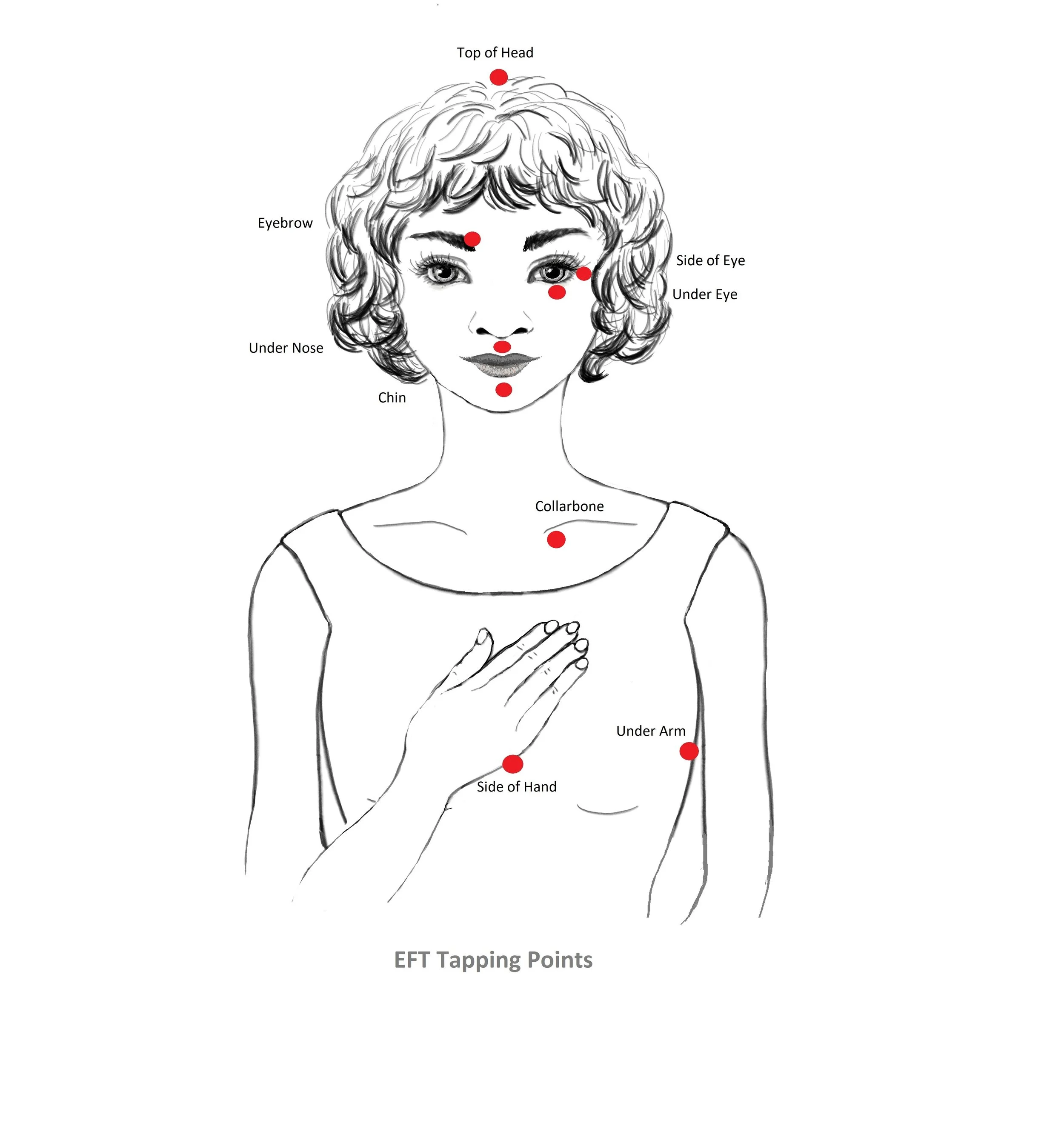
EFT stands for Emotional Freedom Techniques, yet it is often described simply as “Tapping” because it involves gentle fingertip tapping on specific acupressure points. However, EFT Tapping involves much more than tapping on points.
EFT Tapping involves a suite of techniques and processes that brings together tapping, focused attention, compassionate rapport and a safe, supportive space for exploring your experience.
At one level, EFT Tapping can be used as a simple self-help tool that you can use almost anywhere, whenever you need it. It can help you settle in moments of stress or emotional overwhelm, bringing greater calm and a sense of ease.
At a deeper level, EFT Tapping can support you to connect with and process difficult emotions, thoughts, memories and beliefs. As these become less emotionally charged, you can begin to loosen the grip of old patterns and responses. Over time, this can help create new neural pathways and more supportive ways of thinking, feeling and responding — bringing greater clarity, self-awareness, inner balance and freedom to choose differently. In this way, EFT can be both a practical self-help tool for everyday emotional wellbeing and a pathway for deeper emotional transformation when used with a skilled practitioner.
How Does EFT Tapping Work?
For a detailed infographic about how tapping works please click here:
EFT Tapping has been the subject of a growing body of research around the world. EFT International currently lists more than 320 published studies examining EFT, reflecting increasing scientific interest in its potential benefits for emotional wellbeing, stress and other psychological and physiological outcomes. These studies have explored its potential effects on stress, anxiety and other emotional experiences, and researchers continue to investigate the psychological and physiological processes that may help explain these effects. More research is needed to fully understand the mechanisms involved.
Dr Peta Stapleton, PhD, Professor of Psychology at Bond University in Australia, is one of the world’s leading researchers in Emotional Freedom Techniques (EFT). With more than 30 years' experience as a clinical and health psychologist and academic, she has conducted extensive research into EFT, including clinical trials and studies examining psychological and physiological changes associated with tapping. Her work has contributed significantly to the growing scientific interest in EFT and continues to explore how and why tapping works. Peta is one of the trainers with whom I have had the privilege of training.
In recognition of her research into EFT Tapping Peta received the Australian Psychological Society's Distinguished Contribution to Psychological Science Award in 2024. Below is a link to a short TEDx talk by Peta that offers a fascinating introduction to EFT Tapping and some of the research behind it.
https://www.youtube.com/watch?v=0Vu0Tibt1bQ
In simple terms: EFT Tapping can help interrupt the stress response. When you experience strong or threatening emotions, the amygdala — a key part of the brain's threat-detection system — becomes activated. This can trigger the sympathetic nervous system and the body's fight, flight or freeze response, leading to sensations such as a racing heart, tight chest, shallow breathing, sweaty palms and a sense of urgency or overwhelm. When we are highly stressed, it can also become harder to think clearly, pause and respond rather than react.
By combining gentle tapping with focused attention on what you are experiencing, EFT Tapping can help reduce the intensity of the emotional response and support the nervous system to settle. As the body becomes calmer, you will notice more space to think clearly, connect with what you need and choose a more intentional response.
This combination of focused attention and tapping helps reduce emotional intensity, making difficult experiences feel more manageable and easier to explore. As the intensity decreases, you may experience greater clarity, resilience, self-acceptance and confidence, while becoming more aware of limiting beliefs and habitual emotional patterns. For example you may start tapping on your rage which later softens to hurt and sadness then compassion and acceptance which empowers you to respond differently.
This creates space for new perspectives, more positive choices and meaningful emotional change.
“Tapping on specific meridian points while focusing on emotional issues allows individuals to release negative emotions and restore a sense of balance." Dr Peta Stapleton, Professor and Clinical Health Psychologist, Bond University Australia
Below is an infographic explaining how EFT Tapping works, created by Dr David Feinstein, PhD, a clinical psychologist and pioneer in the field of Energy Psychology and, husband and long-time collaborator of energy medicine pioneer Donna Eden.
EFT Tapping
How EFT Tapping becomes the bridge between dream recall and transformation.
A dream may bring something into awareness that your conscious mind has been unable—or perhaps unwilling—to see. It might awaken a feeling, memory, fear, longing or possibility. You may suddenly recognise a pattern in your life or see yourself from a completely different perspective.
But insight alone doesn't always create change.
You can understand something intellectually and still feel anxious. You can recognise an old pattern and still find yourself repeating it. You can know that something happened in the past, yet the emotional response to it may still live within you.
EFT Tapping helps you work with the emotional response itself. By bringing the experience into awareness while tapping, you can reduce its emotional intensity and create space for new perspectives and responses to emerge. Over time, this can help loosen familiar emotional patterns and give you greater freedom to respond differently rather than automatically repeating old reactions.
This is where EFT Tapping becomes the bridge between dream recall and transformation.
Rather than rushing to interpret the dream, EFT invites you to slow down and stay curious about what the dream has awakened within you - perhaps fear, sadness, anger, grief, longing, or even a forgotten hope or possibility.
You might bring the dream image to mind and notice:
What am I feeling?
Where do I feel it in my body?
What does this image remind me of?
What feels most emotionally charged?
What does some part of me want me to know?
Then, as you gently tap on the EFT points, you allow yourself to stay connected to the experience without becoming overwhelmed by it. You don't have to understand the dream before you begin tapping. You can simply tap while holding the dream image, emotion or sensation in your awareness.
As you continue tapping, the emotional intensity may soften. When the nervous system becomes calmer, you may find that new memories, associations, feelings or insights naturally emerge. This is the beautiful meeting point between deeper self-understanding and emotional healing.
The dream opens the door.
EFT helps you walk through it.
The dream may reveal something that is asking to be seen; tapping helps you create enough safety and space to stay with it. The dream may awaken an emotion; tapping helps you gently process what has been stirred. The dream may reveal an old pattern; tapping can help you explore and soften the emotional charge connected to it. And then, beneath the difficult emotion, you may discover something else entirely—a forgotten strength, a need that has been neglected, a new possibility or a part of yourself that is ready to emerge.
In this way, EFT is not being used to interpret the dream.
It is being used to deepen your relationship with the dream.
The dream brings the message. EFT helps you listen to what the message awakens within you. Through that process, what began as an image in the night can become an opportunity for greater awareness, emotional freedom and integration in your waking life.
Gratitude for EFT Tapping
“Thank you for helping me heal the fear and pain of loneliness that I felt after my daughter moved to study in Australia. Memories of being left as a child came flooding in. After healing those memories I feel the difference between being alone and being lonely. Now I love nothing more than walking at dawn and then going to the local cafe for my morning coffee. I feel so connected to nature and myself. I have become my own best friend. Thank you for your masterful work Desley.”
Christina, Wellington, NZ
“ I can’t thank you enough for helping me process that sad dream Desley. I feel so much lighter and brighter like I am remembering it but without the fear and shaking now. You have opened me up to a whole new perspective. Tapping was so strange but so effective. Thank you for your belief in the power of dreams and tapping. It does work”.
Bettina, Brisbane